
If you're wondering what to wear snowmobiling, the short answer is layers, not one heavy outfit. This snowmobile gear guide covers the full checklist: helmet, face protection, and a proper base-to-shell layering system that keeps you warm at a trailhead parking lot and still comfortable two hours into a ride once your body's working harder and generating its own heat.
Cold-weather riding gear fails in two predictable ways: not warm enough at rest, or soaked in sweat from the inside once you're moving, and the fix for both is the same layering approach this guide walks through.
You can browse Perf-Moto's snow and snowmobile apparel filtered specifically for cold-weather riding as you go.
Quick Takeaways
- Layering beats one heavy jacket. Three thinner layers trap more warmth and let you adjust as your body heat changes throughout the day.
- Waterproof and breathable are two different specs. A jacket can be fully waterproof and still leave you soaked in sweat if it doesn't breathe well.
- Insulation type matters as much as thickness. Synthetic insulation keeps working even if it gets damp, which matters a lot more in snow than in dry cold.
- A crossover sled barely changes your clothing needs. The gear checklist is nearly identical whether you're on groomed trails or riding backcountry.
- Face and neck protection isn't optional at speed. Wind chill at 40+ mph drops the effective temperature well below what the thermometer says.
What to Wear Snowmobiling: The Complete Gear Checklist
- Helmet. Snow-specific or a street helmet paired with a heated or dual-pane shield to prevent fogging and icing.
- Balaclava or face mask. Seals the gap between helmet and jacket collar where wind chill hits hardest.
- Goggles. Needed if your helmet doesn't have a full shield, or as backup if the shield fogs.
- Base layer. Moisture-wicking top and bottom against your skin.
- Mid layer. Insulating layer, the piece most riders get wrong by skipping or under-buying.
- Outer shell jacket. Waterproof and breathable, not just water-resistant.
- Bibs or snow pants. Covered in detail below.
- Gloves or mittens. Insulated and genuinely waterproof, not just water-resistant.
- Boots. Insulated, waterproof, sized to fit a thick sock without cutting off circulation.
Snowmobile Helmets: What's Different From a Street Helmet
The certification standards are the same ones covered in our motorcycle helmet guide (DOT, ECE, Snell), but snow riding adds one problem street riding doesn't have: fogging and icing on the inside of the shield from your own breath in freezing temperatures. Dual-pane shields, similar in concept to double-pane windows, trap a layer of air between two lenses to cut down on fogging. Heated shields go a step further with a built-in electric element wired to the sled's battery, which matters more the colder and longer your rides typically run.
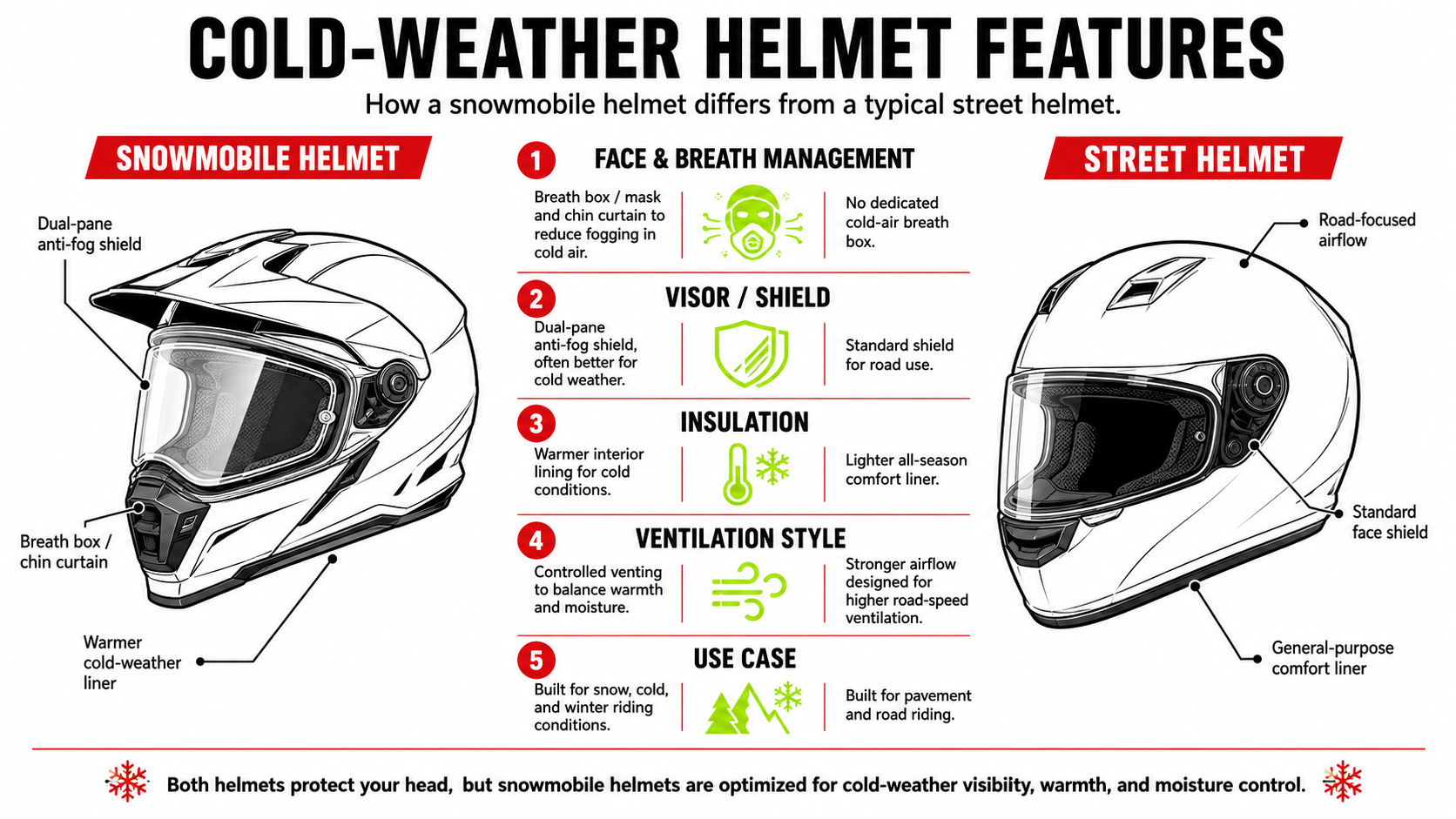
Make sure whatever helmet you choose fits comfortably over a balaclava, since that extra layer of fabric changes the fit more than people expect. Browse snowmobile helmets filtered for cold-weather features like heated shields.
The Layering System: Base, Mid, and Outer Shell for Snowmobiling
This is the part of the gear checklist worth understanding properly, since it solves both cold and sweat at the same time.
Base layer. A moisture-wicking synthetic or merino wool layer against your skin. Its only job is breathability: pulling sweat away from your body so you're not sitting in damp fabric once you stop moving or the trail gets easy for a stretch.
Mid layer. This is where insulation lives, and it's the layer most riders either skip or underestimate. Synthetic insulation (like PrimaLoft or Thinsulate) has a real advantage over down in snow specifically: it keeps most of its warmth even when damp, where down clumps and loses effectiveness once wet. Given how much moisture snow riding involves, from falling snow to your own sweat to the occasional dunk starting a sled, that difference matters more here than in dry winter conditions.
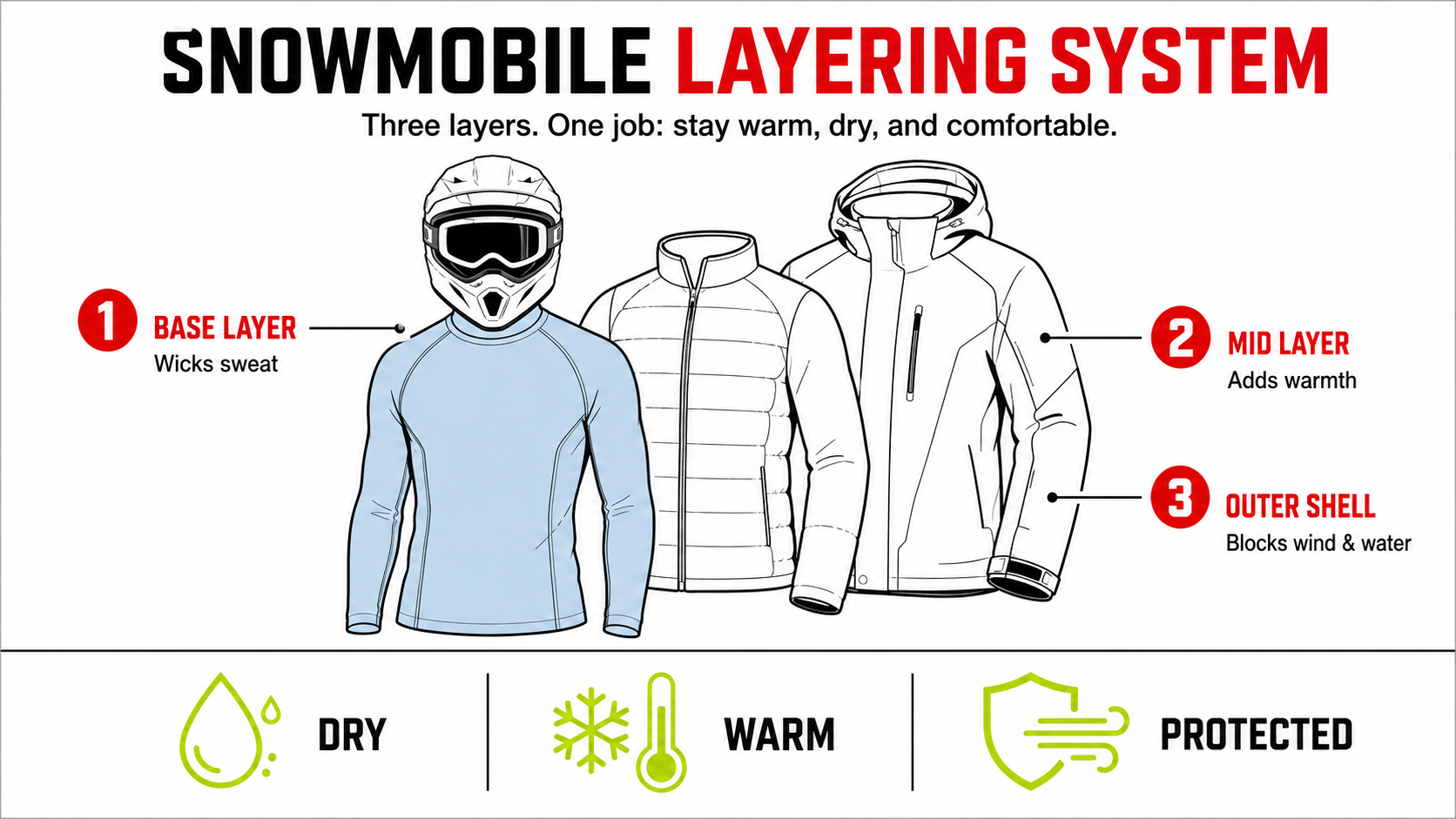
Outer shell. This layer needs two properties, tested and rated separately: waterproofing (how much water pressure the fabric resists before it soaks through) and breathability (how well trapped sweat vapor escapes rather than condensing inside the jacket). A shell can be excellent at one and mediocre at the other, so check both specs rather than assuming a jacket labeled "waterproof" automatically breathes well too.
Stock up on base layers built for temperature regulation, and browse insulated riding jackets for the outer shell.
Bibs vs. Snow Pants: What's the Difference
Bibs (also called overalls) extend up over your chest and shoulders with suspender-style straps, sealing the gap at your waist that ordinary pants leave exposed to snow and wind, especially when you lean forward over the handlebars. Standalone snow pants sit at a normal waistline and pair with a longer jacket that overlaps them, giving up some of that waist-sealing coverage in exchange for being easier to put on and take off, and generally a bit less bulky.
Neither is objectively better. Riders who spend a lot of time kneeling, leaning, or working on the sled tend to prefer bibs for the coverage; riders who move in and out of gear frequently during a day often prefer the convenience of standalone pants. Browse Perf-Moto's snow apparel to compare both styles.
Gloves, Boots, and Face Protection for Extreme Cold
Gloves vs. mittens. Mittens run warmer because your fingers share heat inside one shared compartment instead of being isolated in individual finger sleeves. The tradeoff is dexterity: gloves make it easier to work the throttle, brake, and any handlebar-mounted controls precisely. Some riders split the difference with "lobster" style gloves that pair the warmth benefit of mittens with slightly more finger separation than a true mitten.
Boots. Insulated and genuinely waterproof, sized to leave enough room for a thick wool or synthetic sock without compressing circulation, since tight boots make cold feet worse rather than better.
Face protection. A balaclava or neck gaiter closes the gap between your helmet and jacket collar, which is exactly where wind chill finds its way in at speed. Don't treat this as optional even on a short ride; the exposed strip of skin at your neck and jaw is small, but it's directly in the wind.
Round out your cold-weather kit with gloves, insulated boots, and balaclavas and face masks.
Frequently Asked Questions
How many layers for snowmobiling?
Three: a moisture-wicking base layer, an insulating mid layer, and a waterproof-and-breathable outer shell. Adding more thin layers rather than one heavy piece lets you regulate temperature as your activity level changes throughout the ride, and lets you shed a layer if you warm up rather than being stuck in one fixed level of insulation.
What is a crossover snowmobile?
It's a sled type, not a piece of clothing: a hybrid between a trail sled and a mountain sled, built with a longer track than a typical trail machine but a narrower stance than a dedicated mountain sled. According to Polaris, crossover sleds are designed to handle groomed trails one day and off-trail terrain the next without needing two separate machines. Worth knowing the term, but it doesn't meaningfully change your clothing checklist either way.
What equipment is needed for snowmobiling?
At minimum: a helmet, face protection (balaclava or goggles), a three-layer clothing system (base, insulating mid layer, waterproof-breathable shell), bibs or snow pants, insulated waterproof gloves or mittens, and insulated waterproof boots. Riders heading into backcountry terrain often add avalanche safety equipment on top of that clothing checklist, which is a separate category worth researching specifically if you're leaving groomed trails.
Riding Since '97: Gear That Actually Fits the Way You Ride
Perf-Moto started as a brick-and-mortar motorsports shop in Holland, Michigan back in 1997, before moving fully online. That background shows up in how the site is built: free domestic shipping, a guaranteed-fitment policy, and a lowest-price guarantee, because gear that doesn't fit or ship on time doesn't help anyone ride. Perf-Moto carries snowmobile apparel across dozens of brands, so recommendations here are about what actually keeps you warm and dry, not about pushing one label over another.
Questions about sizing, fitment, or an order? Contact Perf-Moto's team. They're real humans, Monday through Friday, 9am to 5pm EST.
Ready to gear up? Shop the full snowmobile apparel lineup at Perf-Moto and filter by jacket, bibs, or insulation level.