
Boots are the piece of MX gear that gets the most abuse and the least attention when riders are shopping. Knowing how to choose motocross boots properly means understanding a handful of specific things: buckle systems, ankle pivot design, sole construction, and how sizing actually differs from your everyday shoe size, plus what a realistic break-in period actually looks like once you've bought them.
Browse Perf-Moto's motocross boot lineup as you go through what to look for.
Quick Takeaways
- Buckle count and closure style matter more than they look like they would. Three vs. four buckles, replaceable vs. fixed, changes both fit and long-term durability.
- Ankle support comes from the pivot system, not just boot height. A tall boot with a poor pivot can still leave your ankle exposed to injury.
- Sole compound and construction affect peg feel as much as raw grip. A grippier sole isn't automatically the better choice.
- Sizing varies by brand and material. Some lines run true to your regular shoe size; genuine leather boots often need to be a touch snug at first, since they loosen with wear rather than tightening.
- Real break-in takes days to weeks, not one ride. Rushing it, especially with genuine leather, risks cracking rather than speeding anything up.
What Actually Separates a Good MX Boot From a Mediocre One
A real motocross boot has to do several jobs at once: cover and protect your shin and ankle, survive constant impact with the footpeg and ground, and still let your ankle move naturally enough to shift and brake without fighting the boot itself. That combination is why MX boots look so different from street riding boots, and why the details matter more here than almost anywhere else in a rider's gear bag.
When you're actually comparing models side by side, a handful of factors do most of the work:
- Coverage height up the shin and calf
- Hard plating at the shin, toe, and heel, usually TPU
- The buckle closure system and how many buckles it uses
- The ankle pivot mechanism
- Sole compound and construction
- Upper material: microfiber synthetic (lighter, faster break-in) versus genuine leather (more durable long-term, longer break-in)
Everything else in this guide is really just a deeper look at those six things.
Buckles Aren't Just About Closing the Boot
Most modern MX boots use three or four buckles spread across the shin and instep, giving you distributed, adjustable closure pressure rather than one big strap trying to do everything. What's worth actually checking before you buy is whether those buckles are individually replaceable.
Buckles are almost always the first thing to fail on a boot that otherwise still has plenty of life left in it, and a boot built with replaceable buckles saves you from retiring an otherwise-good pair over one broken piece of plastic.
Some boots go a step further on adjustability. Gaerne's Fastback Endurance Supermotard lets you unscrew and adjust the top one or two buckles specifically to make room for a larger calf or a knee brace worn underneath, which is worth checking for if you're running knee protection and don't want to fight your boots every time you gear up.
Ankle Support Is About the Pivot System, Not Just Height
This is where MX boots genuinely earn their reputation as a different category of footwear entirely. The EN 13634 standard, the official European certification for motorcycle footwear, specifically tests something called transverse rigidity: how well a boot resists the sideways twisting motion that causes a large share of real ankle injuries off-road. A tall boot that doesn't manage that twisting force well isn't actually protecting you the way its height suggests it should.
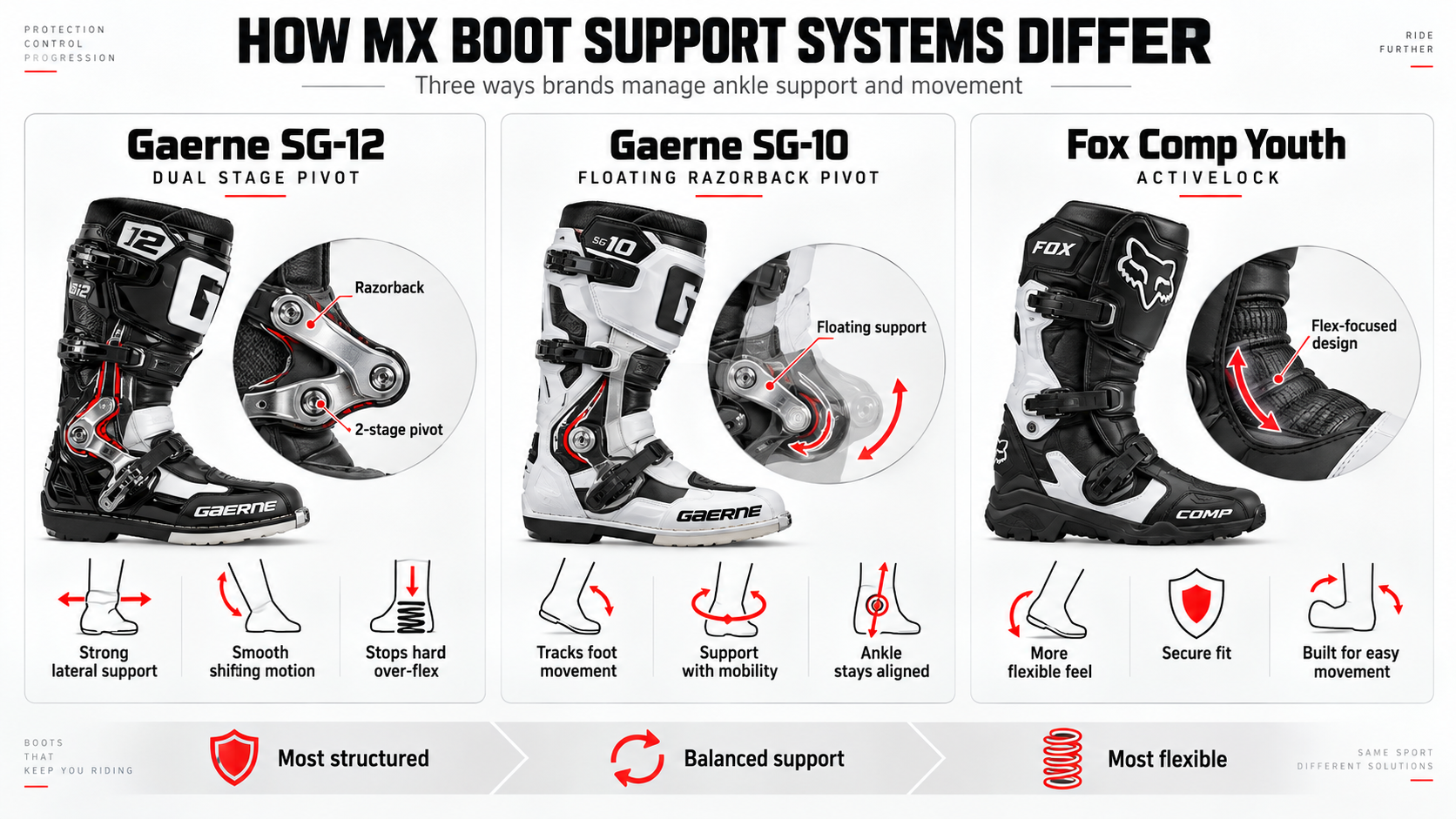
Different brands solve this with genuinely different mechanisms, and it's worth understanding how before assuming one "pivot system" is the same as another:
- Gaerne SG-12 uses a Dual Stage Pivot System: a rigid component called the "Razorback" provides lateral support, paired with a glide-plate that keeps the upper positioned correctly through normal movement, while a second pivot allows natural shifting and braking but bottoms out to absorb shock on a hard compression, like landing an over-jumped jump.
- Gaerne SG-10 takes a related but distinct approach with a Floating Razorback Pivot System built around an ankle alignment mechanism designed to track the foot's natural movement.
- Fox's ActiveLock system, used on boots like the Comp Youth line, leans more toward balancing flexibility with a secure fit rather than building in that same rigid lateral structure.
None of these is objectively superior. They're genuinely different engineering tradeoffs between rigidity, natural ankle movement, and shock absorption, and which one feels right often comes down to personal riding style more than anything you can read off a spec sheet.
Read Also: Best Motorcycle Gloves for Every Season and Riding Style
Sole Design Affects More Than Grip
It's tempting to judge a sole purely on how aggressive the tread looks, but compound matters just as much as pattern. Softer rubber compounds grip a footpeg noticeably better but wear down faster over a season of riding, while harder compounds last longer at some cost to feel, especially in wet or muddy conditions where grip matters most.
Construction details separate the budget tiers from the premium ones here too. The Fox Comp X builds in an internal steel shank for added structural support beyond what rubber alone provides. Higher-end boots in Gaerne's Supermotard line go further with replaceable sole sliders, small wear components that take the brunt of repeated ground contact so the sole itself doesn't wear through prematurely.
Gaerne's use of Goodyear welted construction, a traditional shoemaking technique the brand has used since 1962, even makes proper resoling possible once a sole does eventually wear out, rather than forcing a full boot replacement.
Should I Size Up or Down for Motocross Boots?
There's no single answer that applies across every brand, and treating one boot line's sizing as universal is a common, avoidable mistake. Fox's current lineup (Instinct, Motion, and Comp boots, including the Comp X) is explicitly built on one shared last across the whole range, and Fox states directly that your regular shoe size carries straight across, no adjustment needed.
Genuine leather boots are a different story. Gaerne's SG-10 and SG-12 can feel snug straight out of the box compared to a synthetic boot in the same nominal size, and that's often by design rather than a sizing mistake, since real leather starts stiff and loosens with wear rather than the other way around.
The safest approach is always to check the specific brand's own size chart rather than assuming your street shoe size, or your size in a completely different MX boot brand, will carry over directly.
Best Motocross Boots for Beginners
If you're building your first real MX kit, the honest advice is to prioritize fit and basic protection over premium materials and race-level pivot engineering. The Fox Racing Comp X is a genuinely solid place to start: TPU plating at the shin, toe, and heel, a lugged outsole built for durability, and a true-to-size fit that removes one variable from an already overwhelming first-gear shopping list. That same accessible approach extends to the Fox Comp Youth and Fox Comp 26SP Women's, rather than treating those as an afterthought sizing range tacked onto the men's line.
Save premium leather construction and race-specific pivot systems for a second pair once you actually know how often you're riding and what your feet want from a boot after real time in the saddle. That's not a knock on premium gear; it's just that a beginner rarely knows yet what they'd actually be paying extra for.
How to Break In Motocross Boots
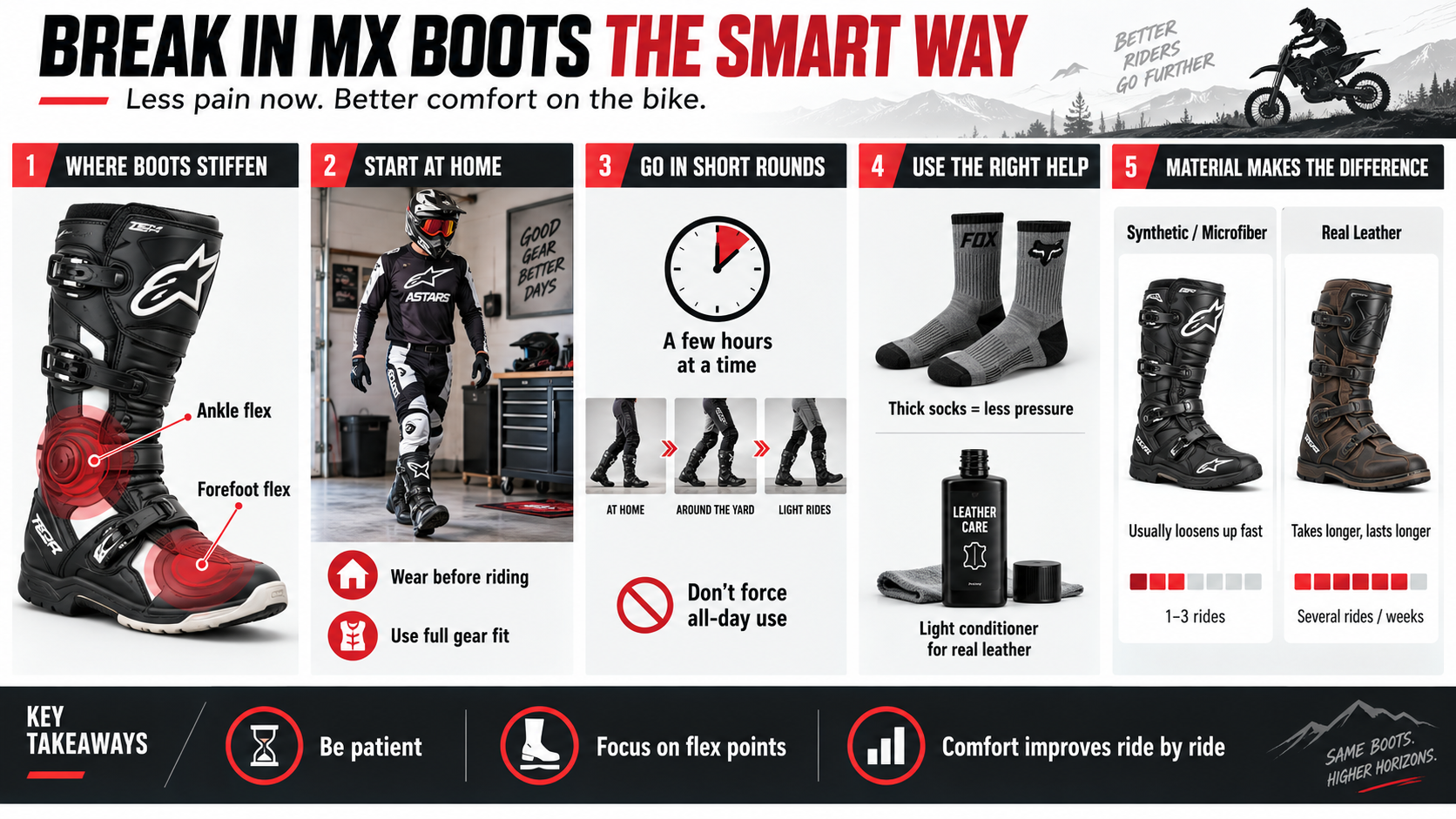
Real leather boots specifically reward patience here, and rushing the process tends to backfire rather than speed anything up. According to footwear break-in research from Stridewise, the two flex points that need the most attention during break-in are the ankle and the ball of the foot, exactly where your foot naturally bends with every step, and where stiff new leather resists that motion the most.
A sensible break-in approach looks like this:
- Wear the boots around the house in full riding gear before your first actual ride, not for the first time mid-moto
- Keep early sessions short, a few hours at a time, rather than a full day right away
- Wear thick socks during this period to cushion pressure points while the material is still stiff
- For genuine leather specifically, apply a leather conditioner lightly before those first few wears to soften the material and shorten the timeline
How long this actually takes depends heavily on material. Synthetic microfiber boots, like most of Fox's current lineup, typically feel close to fully broken in within the first few rides. Genuine leather boots, like Gaerne's SG-10 or SG-12, realistically take several rides, sometimes a few weeks of regular use, before the leather has fully conformed and stopped feeling stiff at those ankle and forefoot flex points. That longer timeline isn't a flaw. It's the same tradeoff that makes leather more durable over the long run in the first place.
Frequently Asked Questions
Can I ride a dirt bike in regular shoes or sneakers?
Technically yes, but it's a real safety gap, not just a comfort issue. Sneakers leave your ankle completely unsupported against the twisting force that causes a large share of real off-road injuries, offer no shin or toe protection against footpeg impact, and have soles that aren't built to grip a peg the way a purpose-built sole is. If you're riding even occasionally, boots are one of the pieces of gear worth prioritizing early.
Are motocross boots waterproof?
Most true racing-focused MX boots are not fully waterproof by default. Manufacturers generally prioritize ventilation, drainage, and lighter weight over sealing out water completely, since those matter more for race performance. Some models built more for trail or enduro riding add a genuine waterproof membrane, so check the specific product description rather than assuming any tall MX-style boot keeps water out.
How often should you replace motocross boots?
There's no fixed timeline based on age alone, but a common guideline is somewhere between one season and five years depending on how often you ride and how well you maintain them. The sole is usually the first part to wear out, and on many premium boots it's replaceable on its own rather than requiring a full boot replacement. Regardless of age, retire a pair immediately if the shin plate is cracked, the ankle structure feels compromised, or they've been through a serious crash, since internal damage isn't always visible from the outside.
What socks should I wear with motocross boots?
Tall, moisture-wicking socks built for riding, not cotton crew socks. Cotton holds sweat instead of moving it away from your skin, which gets uncomfortable fast and can contribute to blistering during break-in specifically. A proper riding sock also extends up past the top of the boot, preventing direct skin contact with the boot's edge or any exposed buckle hardware underneath your riding pants.
Boots Built to Outlast a Season, Not Just Look the Part
A boot that looks aggressive on the shelf doesn't mean much if the buckles snap after six rides or the pivot system doesn't actually manage a hard landing well, which is why Perf-Moto carries boots across both accessible synthetic options and premium leather construction rather than pushing one tier as the default choice. The right pick depends on how often you're actually riding, not which one photographs best.
Not sure which pivot system or sizing approach fits your riding style? Ask the team, Monday through Friday, 9 am to 5 pm EST.
Shop motocross boots and compare buckle systems, ankle support, and sole construction directly.