
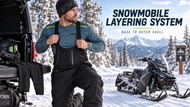
How to layer for snowmobiling comes down to three jobs done by three separate pieces, not one heavy suit doing everything at once. A base layer moves sweat away from your skin, a mid layer traps warm air, and an outer shell blocks wind and snow from getting through. Skip any one of those jobs, or try to make one piece do two jobs at once, and you end up cold, damp, or both, regardless of how expensive the gear looks.
Browse Perf-Moto's base layers as you build out the system below, piece by piece.
Quick Takeaways
- Cotton is the one fabric to actually avoid next to your skin. It holds moisture instead of moving it away, which works against everything the rest of your layering system is trying to do.
- The mid layer is increasingly built into the jacket itself, as a removable liner, rather than sold as a separate piece you have to buy and manage on its own.
- Waterproof ratings are measured in real numbers (mm and g/m²), and they mean something specific, not just marketing language.
- Bibs solve a gap problem pants can't. They seal the space where your jacket and pants meet, which is exactly where cold air and snow find their way in.
- Insulation is measured in grams, and more isn't automatically better once you're working hard on the sled rather than sitting still.
Base Layer: Moisture Wicking Starts Here
The base layer's only job is moving sweat away from your skin before it has a chance to sit there and go cold. According to Mayo Clinic's guidance on dressing for winter exercise, the right approach starts with a thin layer of synthetic material that draws sweat away from your body, with cotton specifically called out as the fabric to avoid since it stays wet against your skin.
Perf-Moto's FXR Vapour Merino base layer top blends 20% merino wool with 80% performance polyester specifically to combine wool's ability to stay warm even when damp with polyester's fast-drying, moisture-wicking properties. The contour fit isn't just about looking streamlined under your other layers; a snugger fit against your skin is what actually lets a base layer wick moisture effectively in the first place, since loose fabric doesn't move sweat the same way.
Mid Layer: Why It's Often Built Into the Jacket, Not a Separate Piece
Traditionally, the mid layer was a separate fleece or wool piece you added between your base layer and outer shell. Modern snowmobile jackets increasingly build that insulating layer directly into the jacket itself, as a removable liner rather than a standalone garment you have to buy, manage, and remember to bring.
Perf-Moto's FXR Boost FX jacket is a clean example of this approach. The outer shell itself carries 90g of insulation with a moisture-wicking mesh lining, and a separate removable liner adds another 175g of insulation on top when you need it, essentially giving you a 2-in-1 jacket that adjusts to the day's temperature by zipping a piece in or out, rather than requiring a completely separate mid-layer garment underneath.
The Outer Shell: Waterproof Ratings That Actually Mean Something
Outer shell waterproof ratings aren't just marketing copy; they're a real measurement of how much water pressure a fabric can withstand before it soaks through, expressed in millimeters, alongside a separate breathability rating in grams per square meter (how much moisture vapor can pass through the fabric in a day).
The FXR Boost FX jacket, for example, uses a HydrX Pro laminate rated at 10,000mm waterproofing and 8,000g/m² breathability, a genuinely solid combination for serious snow riding, not just light flurries.
Higher numbers on both scales generally mean better performance, but breathability matters just as much as waterproofing. A shell that's completely waterproof but doesn't breathe traps your own sweat inside, defeating the purpose of the moisture-wicking base layer underneath it.
Snowmobile Bibs vs. Snow Pants: Solving the Gap Problem
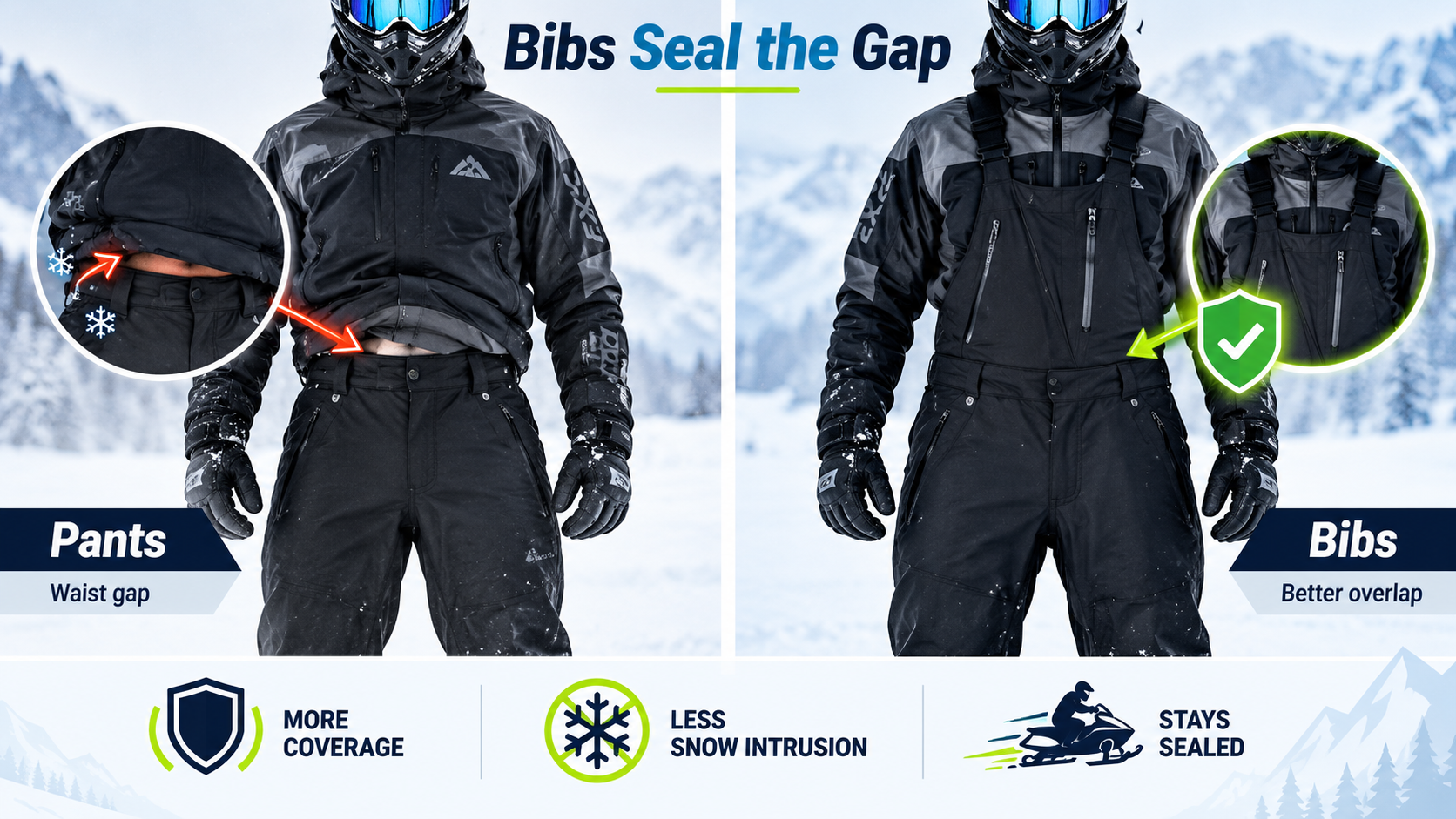
Regular snow pants leave one specific vulnerability that bibs are built to solve: the gap between your pants waistband and the bottom of your jacket, which is exactly where cold air and snow work their way in when you lean forward over the handlebars. Bibs extend up over your chest and shoulders, closing that gap entirely.
Perf-Moto's 509 Stoke Bib Shell is built specifically around that sealed-system idea: a 20,000mm/20,000g/m² waterproof-breathable rating, welded seams at critical waterproofing points, and a bib designed to snap directly to a matching 509 Stoke jacket for a fully connected suit, or run separately like standard bibs if you'd rather keep them independent. The insulated seat is a detail worth noting too, since sitting directly on a cold seat for hours is a real, specific way heat escapes that a jacket alone does nothing to prevent.
Frequently Asked Questions
How do I stay warm snowmobiling?
Build a genuine three-layer system rather than relying on one heavy piece: a moisture-wicking base layer against your skin, an insulating mid layer (often a removable jacket liner these days), and a waterproof, breathable outer shell. Add bibs instead of standard pants if you want to close the gap at your waist where cold air typically finds its way in, and avoid cotton entirely in any layer that touches your skin.
What are the best base layers for sledding?
Look for synthetic or merino wool blends specifically, not cotton. A merino-polyester blend, like FXR's Vapour Merino top, combines wool's ability to stay warm when damp with polyester's fast-drying properties, and a contour or fitted cut helps the fabric actually wick moisture the way it's designed to rather than sitting loose against your skin.
Can I wear cotton under my snowmobile gear?
You can, but it works against everything the rest of your layering system is trying to do. Cotton absorbs sweat rather than moving it away from your skin, and once it's wet, it stays wet and cold for the rest of the ride. Every layer above a cotton base is compensating for a problem that a synthetic or wool base layer simply wouldn't create in the first place.
Do I need bibs, or can I just wear snow pants?
Regular snow pants work fine for casual, shorter rides, but bibs solve a specific problem pants can't: the gap at your waist where your jacket and pants meet. If you ride for extended periods, lean forward over the handlebars often, or ride in genuinely cold conditions, that sealed coverage is worth the switch.
One System, Not a Pile of Separate Purchases
Getting cold on a sled rarely comes down to one bad piece of gear; it's usually a gap somewhere in the system, a cotton shirt under a great jacket, or pants that don't actually connect to anything above them. Perf-Moto carries base layers, mid-layer jackets, and bibs built to work together as an actual system rather than mismatched pieces bought separately.
Not sure which combination fits how cold you actually ride? Ask the team, Monday through Friday, 9 am to 5 pm EST.
Shop base layers, jackets, and bibs and build your layering system from the skin out.