
If you're asking what gear I need to start riding a motorcycle, here's the short version: a rated helmet, an abrasion- and impact-rated jacket, riding pants or reinforced jeans, gloves, and over-the-ankle boots, worn every time you ride, not just on long trips.
Riders call this ATGATT: All The Gear, All The Time. It isn't a fashion statement. It's a recognition that most crashes happen on short, familiar rides at moderate speed, exactly the trips where it's tempting to skip gear because it's "just down the street."
This motorcycle riding gear guide breaks down each piece of that kit: what it's actually rated for, what the technical terms on the tag mean, and how to layer it so the same gear works across three seasons instead of one. By the end, you'll know what separates real protection from gear that just looks the part before you shop motorcycle riding apparel.
Quick Takeaways
- ATGATT is the baseline. Gear up for the ride around the corner the same way you would for a three-hour trip.
- Jackets and pants carry two separate ratings. Impact armor (CE Level 1 or 2) and abrasion resistance are tested differently and rated separately, so check both.
- Regular jeans fail fast in a slide. AAA-rated riding jeans or dedicated riding pants last meaningfully longer against pavement.
- Gloves and boots aren't optional add-ons. Hands and feet are usually the first body parts to hit the ground in a fall.
- Layering lets one wardrobe cover every season. A base layer, a mid layer where armor lives, and a weather-resistant shell do the job year-round.
What Gear Do I Need to Start Riding a Motorcycle? The ATGATT Checklist
Five pieces, in order of how much they matter:
- Helmet. DOT at minimum, ideally with ECE 22.06 or Snell added on top. This is the single highest-impact gear decision you'll make.
- Jacket. Look for CE-rated armor at the shoulders and elbows, plus a genuine abrasion-resistant shell (leather, or textile rated to a real standard, not just "durable" marketing language).
- Pants. Riding-specific pants, textile overpants, or AAA-rated riding jeans. Plain fashion denim doesn't count.
- Gloves. Full-fingered, with some form of knuckle protection. Your hands are an instinctive brace point in a fall.
- Boots. Over-the-ankle, with a sole that grips a foot peg and a shifter pad if you ride a manual. Sneakers and casual shoes leave your ankles completely exposed.
Motorcycle Jackets: Armor and Abrasion Resistance Explained
A jacket protects you two different ways, and they're tested and rated separately. It's worth understanding both before you buy.
Impact armor covers the shoulders, elbows, and back, absorbing the force of hitting the ground or an object. It's rated under the EN 1621 family of standards, with two performance tiers:
|
Body Area |
Standard |
Level 1 (max transmitted force) |
Level 2 (max transmitted force) |
|
Limbs (shoulders, elbows, hips, knees) |
EN 1621-1 |
35 kN mean, 50 kN peak |
20 kN mean, 30 kN peak |
|
Back |
EN 1621-2 |
18 kN mean |
9 kN mean |
Lower numbers mean less force reaches your body, so Level 2 is the more protective rating at both locations. For a back protector specifically, the jump from Level 1 to Level 2 roughly halves the force that reaches your spine, which is meaningful enough that Level 2 is worth prioritizing there even if you compromise elsewhere. You can see the full testing methodology directly from SATRA, the lab that helped write these standards.
Abrasion resistance is a completely different property: how long the shell fabric holds together while sliding across pavement before it wears through. This comes down to material (leather, or textiles like Cordura, Kevlar, or Dyneema) and construction, not the armor inside it. A jacket can have excellent armor and mediocre abrasion resistance, or vice versa, so check both specs rather than assuming one implies the other.
Ready to shop? Browse motorcycle jackets or go straight to standalone armor and protective gear if you're upgrading a jacket you already own.
Motorcycle Pants: Riding Jeans vs. Textile vs. Leather
Can I wear jeans to ride a motorcycle? Technically yes, but plain fashion denim offers very little real protection. Independent testing organizations like MotoCAP rate abrasion resistance in seconds: how long a fabric lasts under a moving abrasive surface before it wears through to a hole.
Ordinary jeans tend to fail almost instantly under that kind of test. Riding jeans built with aramid or Kevlar lining and rated AAA last considerably longer, and dedicated textile or leather riding pants generally outperform reinforced jeans further still.
For anyone riding often or at higher speeds, textile overpants or leather pants are worth the step up from jeans of any kind, mainly for the coverage and consistency, since a full pant leg doesn't ride up or shift the way jeans can in a slide. Check out Perf-Moto's riding pants and chaps for options across that range.
Motorcycle Gloves: What to Look For
A few features separate real riding gloves from ordinary ones:
- Knuckle protection. A hard shell or armor over the knuckles, since an open hand instinctively hits the ground first in a fall.
- Palm sliders. Small hard patches on the outer palm that let your hand slide instead of catching and twisting your wrist.
- Cuff style. Gauntlet-cuff gloves go over the jacket sleeve and seal out wind and water better; short-cuff gloves go under the sleeve and are easier to pair with a jacket that already has a snug wrist closure.
- Touchscreen compatibility. Minor, but worth checking if you use your phone at stops.
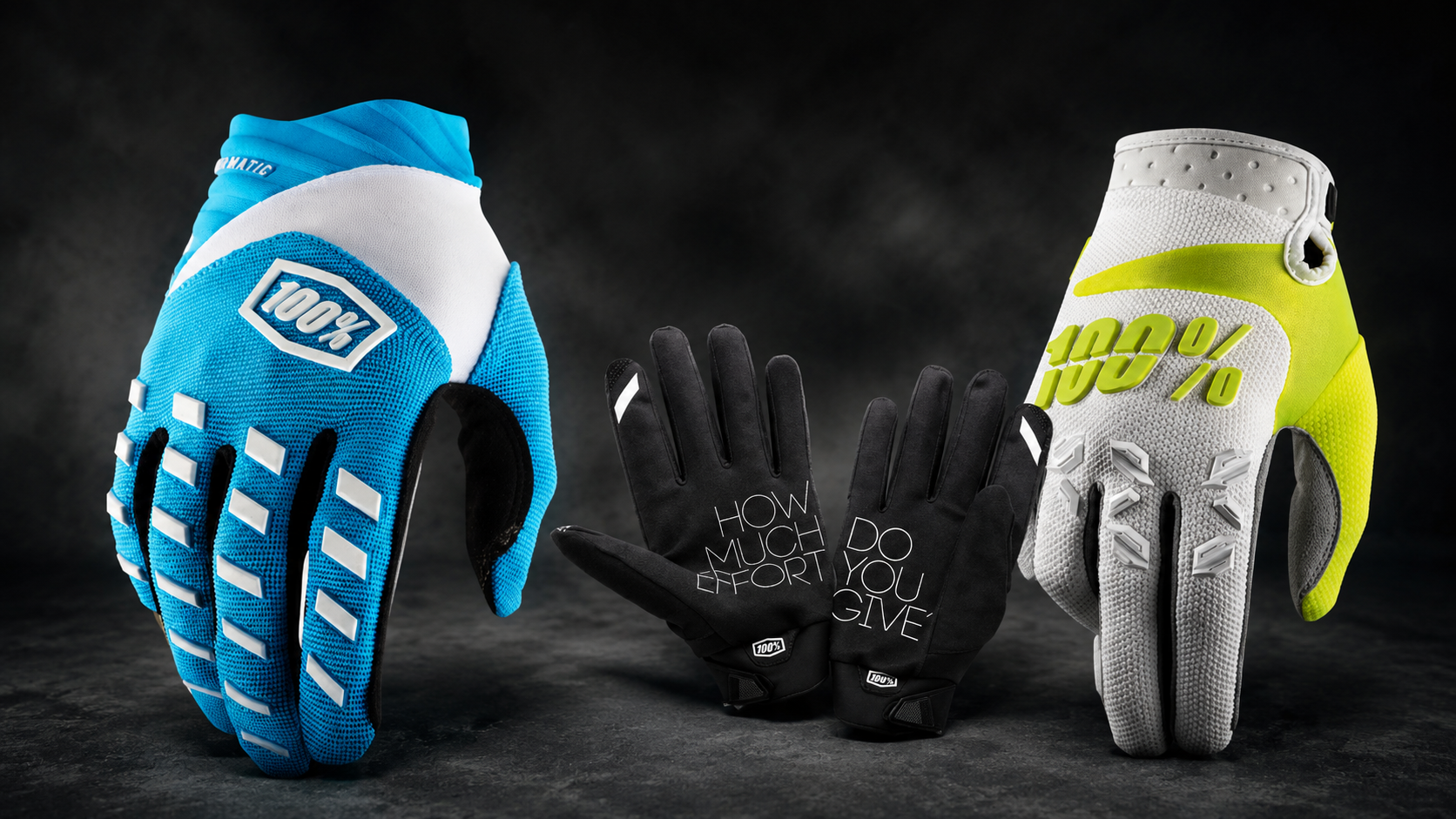
Materials shift with season: perforated leather or mesh for summer, insulated and waterproof options for winter. Browse the full range of motorcycle gloves to filter by season and cuff style.
Motorcycle Boots: Why Sneakers Don't Cut It
Regular sneakers or casual shoes leave three things exposed that dedicated boots protect: the ankle joint, the top of the foot, and, on a manual bike, your shifting foot from repeated impact against the shift lever. Look for boots that cover over the ankle bone, have a sole with real grip on a foot peg, and include a reinforced shifter pad on the left boot if you ride anything other than an automatic or electric bike.
Touring and adventure riders often want a taller boot with more ankle and shin coverage; commuters riding shorter distances can usually get away with a lower-cut riding boot that's comfortable to walk in once off the bike. Shop motorcycle boots and footwear across both styles.
Layering Motorcycle Gear for Every Season
The same core gear works from spring through winter if you think of it as three layers instead of one outfit:
- Base layer. A moisture-wicking shirt and leggings against your skin, doing for riding what it does for any other outdoor activity: pulling sweat away from your body so you're not sitting in it at highway speed.
- Mid layer. This is where your armor lives, inside the jacket and pants themselves, plus an optional insulating layer (fleece or a light puffer) added underneath on cold days and removed when it warms up.
- Outer shell. The abrasion-resistant jacket and pants, doing double duty as both your crash protection and your weather barrier.
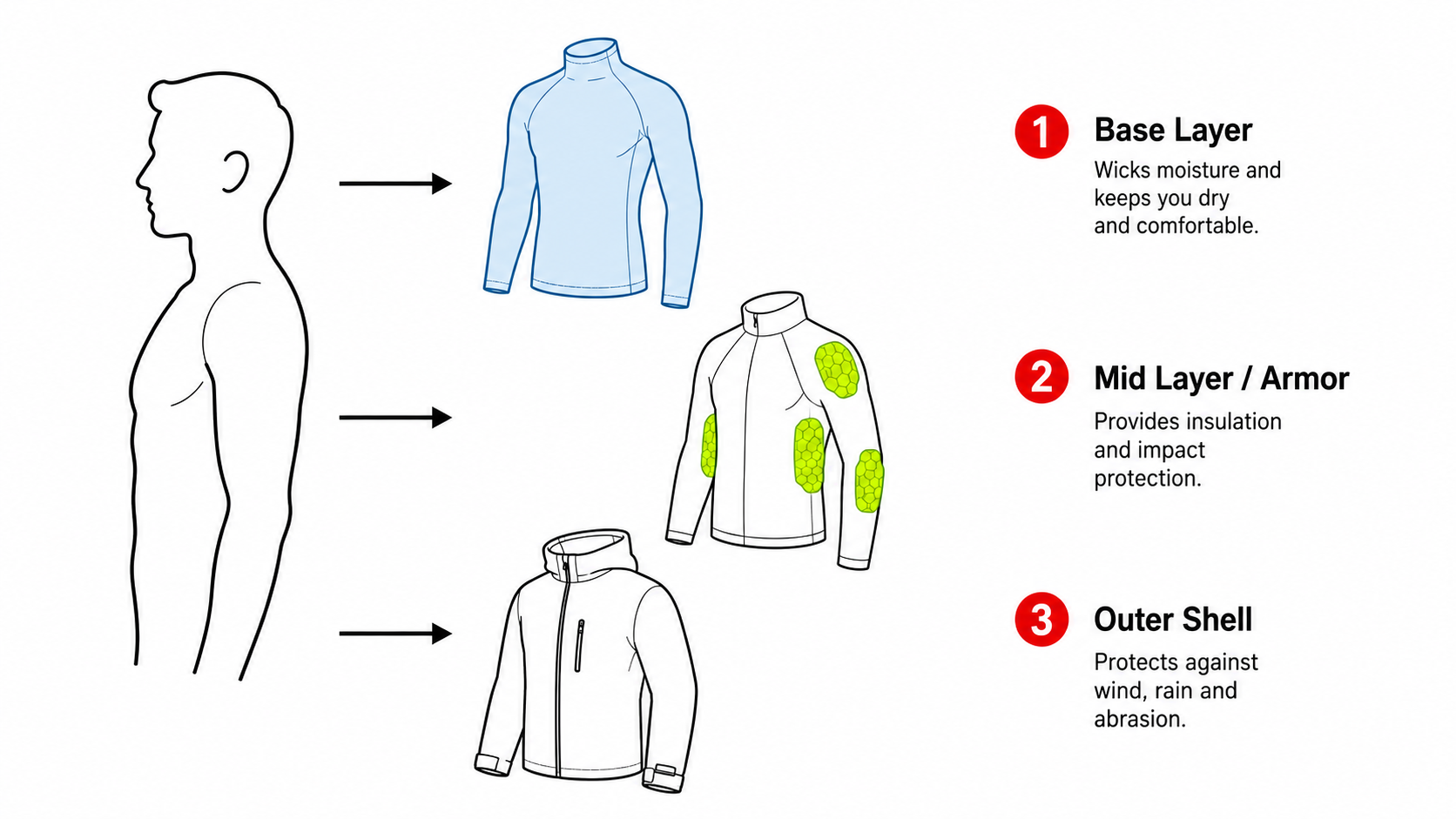
The practical upside: you're not buying separate summer and winter wardrobes, just adding or removing the base and mid layers underneath the same abrasion-resistant shell. For genuinely wet climates, pack rain gear that layers over the outer shell rather than replacing it, and stock up on base layers built for temperature regulation rather than borrowing a cotton undershirt from your dresser (cotton holds sweat instead of moving it, which gets cold fast once you stop riding).
Frequently Asked Questions
What is all the gear you need for a motorcycle?
At minimum: a certified helmet, an abrasion- and impact-rated jacket, riding pants or AAA-rated reinforced jeans, full-fingered gloves with knuckle protection, and over-the-ankle boots. That's the standard ATGATT kit. Beyond that, layering pieces (base layers, rain gear) extend the same core wardrobe across different weather rather than adding entirely new categories.
What is the gear order for putting on motorcycle gear?
You can, but plain fashion denim provides very little abrasion resistance and can wear through almost instantly in a slide. If jeans are your preference, look specifically for AAA-rated riding jeans with aramid or Kevlar lining, which last considerably longer under the same conditions. Dedicated textile or leather riding pants outperform even reinforced jeans, mainly due to fuller leg coverage.
Can I wear jeans to ride a motorcycle?
You can, but plain fashion denim provides very little abrasion resistance and can wear through almost instantly in a slide. If jeans are your preference, look specifically for AAA-rated riding jeans with aramid or Kevlar lining, which last considerably longer under the same conditions. Dedicated textile or leather riding pants outperform even reinforced jeans, mainly due to fuller leg coverage.
What are the 5 safety tips for motorcycle riders?
Gear matters, but it's one part of a bigger picture. Five habits that consistently make a difference: wear ATGATT on every ride, not just the long ones; add visible or reflective elements to your gear for low-light riding; check that your gear still fits properly and hasn't degraded (UV exposure and wear both reduce abrasion resistance over time); dress for the temperature you'll actually ride in, not the temperature at your front door; and ride within what your current gear and experience level can handle, upgrading both together as you go.
Riding Since '97: Gear That Actually Fits the Way You Ride
Perf-Moto started as a brick-and-mortar motorsports shop in Holland, Michigan back in 1997, before moving fully online. That background shows up in how the site is built: free domestic shipping, a guaranteed-fitment policy, and a lowest-price guarantee, because gear that doesn't fit or ship on time doesn't help anyone ride. Perf-Moto carries riding apparel across dozens of brands, so recommendations here are about what actually protects and fits well, not about pushing one label over another.
Questions about sizing, fitment, or an order? Contact Perf-Moto's team. They're real humans, Monday through Friday, 9 am to 5 pm EST.
Ready to gear up? Shop the full motorcycle riding apparel lineup at Perf-Moto and filter by jacket, pants, gloves, or boots.