
A motorcycle helmet size chart only works if you measure your head correctly first, and most sizing complaints trace back to a rushed or sloppy measurement rather than a bad chart. If you're asking what size motorcycle helmet do I need, the real answer starts with a soft tape measure, not a guess based on your hat size or what fit you last time in a different brand.
This guide walks through the actual measuring technique, a real brand's size chart so you can see how the numbers translate, and the head-shape and cheek-pad details that separate a helmet that fits from one that's just technically the right circumference.
Once you've got your number, you can shop helmets by size and filter directly to what fits.
Quick Takeaways
- Measure in centimeters for the most precise result. Most brands build their charts around cm first, with inches and hat sizes converted afterward.
- Sizing is not standardized across brands. A Medium in one helmet can fit like a Small or Large in another, so always check the specific brand's own chart.
- Head shape matters as much as circumference. Round oval, intermediate oval, and long oval heads fit differently even at the same measurement.
- New helmets should feel snug, almost slightly tight. Interior padding compresses and breaks in by roughly 15 to 20 percent over the first several rides.
- The 2-2-2 rule is a fast sanity check, not a replacement for measuring properly with a tape and chart first.
How to Measure Your Head for a Motorcycle Helmet
You need a soft cloth tape measure, the flexible kind used for sewing, not a rigid metal one. No tape measure on hand works too: a piece of string and a ruler does the same job.
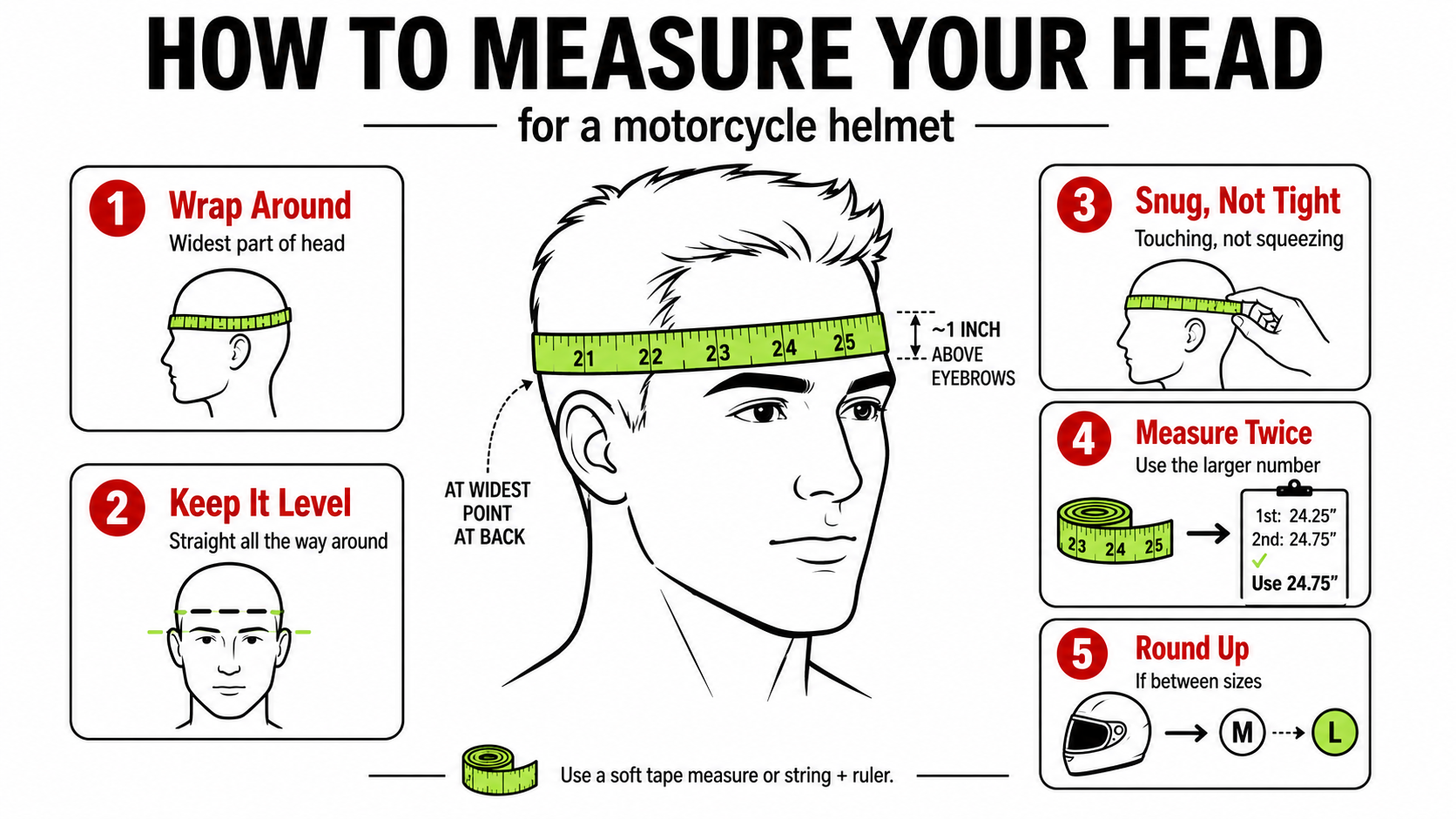
- Wrap the tape around the widest part of your head. That's roughly one inch above your eyebrows in front, and around the widest point at the back of your skull.
- Keep it level all the way around. A tape that dips lower in back than in front will give you a shorter, inaccurate reading.
- Snug, not tight. You want the tape making full contact with your head without indenting your skin.
- Measure twice and use the larger number. Small variations between attempts are normal; the larger reading is the safer one to size from.
- Round up if you land between two sizes. A helmet that's slightly loose on the shelf gets tighter as the padding breaks in, so erring larger tends to cause more problems than erring smaller.
Motorcycle Helmet Size Chart: Centimeters, Inches, and Hat Sizes
Here's a real example, HJC's official size chart, since HJC is a brand actually carried at Perf-Moto and gives you a concrete sense of how the numbers translate across measurement systems:
|
Size |
Centimeters |
Hat Size |
Inches |
|
XS |
54-55 |
6¾ - 6⅞ |
21¼ - 21⅝ |
|
S |
55-56 |
6⅞ - 7 |
21⅝ - 22 |
|
M |
57-58 |
7⅛ - 7¼ |
22¼ - 22⅞ |
|
L |
58-59 |
7¼ - 7⅜ |
23¼ - 23⅝ |
|
XL |
60-61 |
7½ - 7⅝ |
23⅝ - 24 |
A few practical takeaways from this chart: a 57cm head lands squarely in HJC's Medium range. Hat size "7" corresponds to roughly 22 inches of circumference, right at the boundary between HJC's Small and Medium. And 58cm sits right at the seam between Medium and Large, meaning it's on the larger side of average without being unusual.
The important caveat: this is one brand's chart. Sizing genuinely isn't standardized across manufacturers, so a Medium in a different brand can correspond to a completely different centimeter range. Always pull up the specific brand's own chart for the exact helmet you're buying rather than assuming your size carries over.
Head Shape Matters: Oval vs. Round and Everything Between
Circumference gets you to the right general size, but head shape determines whether a helmet actually feels comfortable once it's on. Most brands describe three shapes:
- Round oval. Close to equally wide and long, roughly circular when viewed from above.
- Intermediate oval. Slightly longer front-to-back than it is wide. This is the most common shape, and most helmet brands design their standard liner around it.
- Long oval. Noticeably longer front-to-back and narrower side-to-side than a round or intermediate oval head.
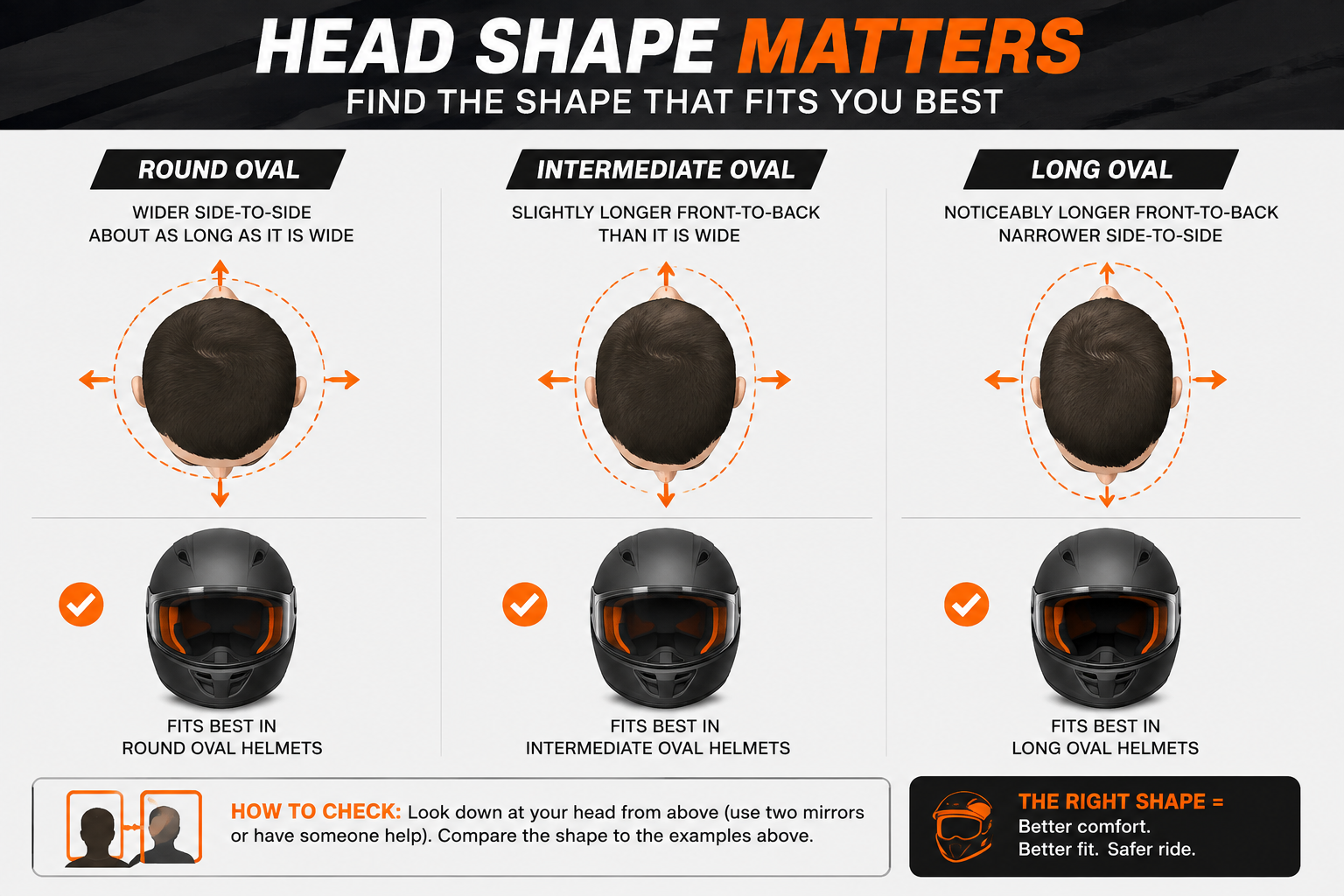
A rough way to self-assess: look straight down at the top of your head in two mirrors angled toward each other, or have someone else look from directly above. If a helmet feels tight at the temples but loose at the forehead and back, that's often a sign your head is narrower and longer than the helmet's liner shape assumes, worth trying a brand known for a longer-oval fit instead of just going up a size.
Cheek Pads and Fit: Getting the Last 10% Right
Once you're in the right size and shape, cheek pads are the fine-tuning tool. New helmets should feel snug enough that you're slightly aware of pressure on your cheeks, since that padding compresses over the first 15 to 20 percent of its life as you wear it in. A helmet that feels loose in the store will almost always feel looser, not less, after a few weeks of normal use.
If a helmet is otherwise the right size and shape but feels a bit tight at the cheeks, many brands sell thinner aftermarket cheek pads as a swap, letting you fine-tune fit within the same shell size rather than jumping to a different size that might be wrong everywhere else. The reverse is true too: if a helmet feels loose after break-in, a thicker replacement pad can often restore the snug fit without buying a new helmet entirely.
Once you've got your size and shape narrowed down, use the 2-2-2 rule as a final check before you commit: about two finger-widths above your eyebrows for the front edge, a two-finger V shape where the straps meet under your ears, and two fingers of space between your chin and the fastened strap. If all three check out, you've got a properly sized helmet.
Frequently Asked Questions
What is the 2-2-2 rule for bike helmets?
A quick three-point fit check: two finger-widths above the eyebrows for helmet position, a two-finger V shape where the straps meet under each ear, and two fingers of space between your chin and the fastened chin strap. It's a fast sanity check to run after you've already sized and tried on a helmet, not a substitute for measuring your head against a real size chart first.
What size is a 57cm helmet?
In HJC's size chart, 57cm falls at the start of their Medium range (57-58cm). Other brands may place 57cm slightly differently, since sizing charts vary between manufacturers, so always confirm against the specific brand you're buying.
How many inches is a size 7 helmet?
Hat size 7 corresponds to roughly 22 inches of head circumference, which lands right around the boundary between Small and Medium in HJC's chart (55- 56 cm for Small, 57- 58 cm for Medium). Hat sizes are an older sizing convention and less precise than measuring directly in centimeters, so treat a hat-size number as a rough starting point rather than a final answer.
Is a 58cm head large?
It's on the larger side of average, but not unusually so. In HJC's chart, 58cm sits right at the seam between Medium and Large, meaning it could reasonably fall into either size depending on the specific helmet's fit and your head shape.
How do I convert head size to helmet size?
Measure your head circumference with a soft tape measure, in centimeters for the most precise result, then compare that number directly against the specific helmet brand's own size chart. Avoid converting from an old hat size or a different brand's chart as a shortcut, since sizing isn't standardized and small differences compound quickly.
What is the best S size helmet for men?
There isn't one universal "best," and helmet sizing isn't really a gendered category since head size and shape vary independently of gender. Small sizing spans nearly every brand Perf-Moto carries, including HJC, Bell, and Scorpion, and the right pick comes down to matching your head shape (round, intermediate, or long oval) to a brand known for that fit, not searching for a single top-rated model.
Riding Since '97: Gear That Actually Fits the Way You Ride
Perf-Moto started as a brick-and-mortar motorsports shop in Holland, Michigan back in 1997, before moving fully online. That background shows up in how the site is built: free domestic shipping, a guaranteed-fitment policy, and a lowest-price guarantee, because gear that doesn't fit or ship on time doesn't help anyone ride. Perf-Moto carries helmets across dozens of brands and sizes, so recommendations here are about what actually fits your specific head, not about pushing one label over another.
Questions about sizing, fitment, or an order? Contact Perf-Moto's team. They're real humans, Monday through Friday, 9 am to 5 pm EST.
Ready to find your size? Find your size and shop helmets at Perf-Moto filtered by size, brand, or head shape.